
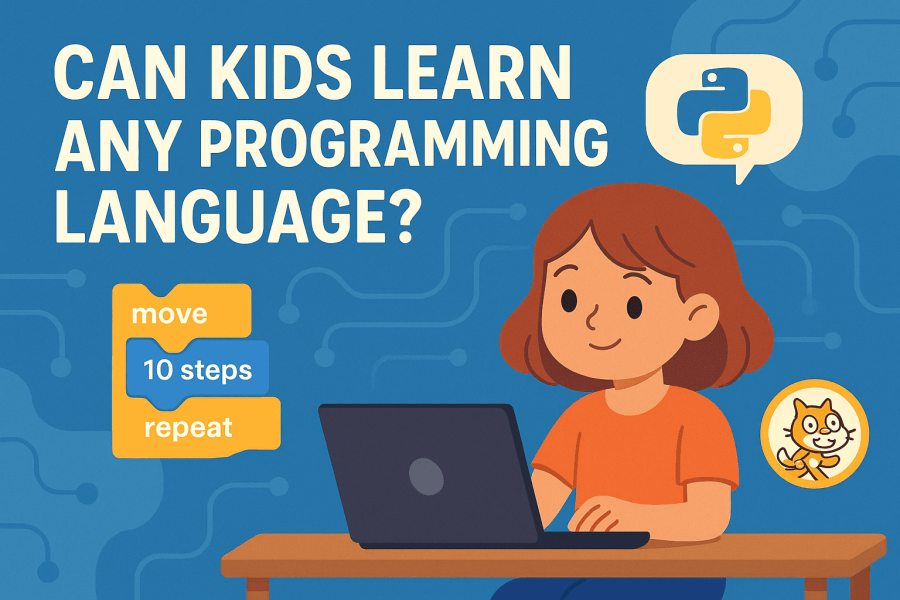
In today’s digital age, it’s no surprise that parents everywhere search for terms like “Online Coding for Kids Near Me” or “Coding Classes for Kids Near Me.” Getting kids started with programming early is not only popular—it’s smart. But a question often arises: Can kids really learn any programming language?
At PIEX Education, we say yes—with the right approach, resources, and support, kids can learn almost any programming language. Let’s explore how kids can become confident coders, no matter what language they’re tackling.
Why Teach Programming to Kids?
Coding is more than just writing lines of instructions for a computer. It’s a creative, logic-based activity that improves a child’s thinking. Online coding classes for kids and teens teach them to learn to solve problems, think critically, and express themselves digitally. These are skills that are becoming essential in all walks of life.
Plus, coding is fun! Kids’ online coding classes and games help make learning interactive and engaging. Kids aren’t just learning to code—they’re coding to learn.
Want to understand the foundation behind all great programming? Explore our Web Story: Important Computer Science Principles for Kids

What Makes a Programming Language Kid-Friendly?
Not all programming languages are created equal, especially for young learners. Some have a steep learning curve, while others are visual and intuitive.
Here are some key qualities that make a programming language suitable for kids:
- Visual Interface: Drag-and-drop coding makes it easy for beginners to grasp logic without syntax errors.
- Instant Feedback: Platforms that show immediate results (like animations or games) help reinforce learning.
- Fun and Purposeful: Kids need to feel like they’re doing something cool, like building a game or animating a character.
Popular beginner-friendly languages like Scratch, Blockly, and even Python meet these criteria. But can kids move beyond these and learn more advanced languages, too? Absolutely.
Beginner-Friendly Programming Languages
Not all programming languages are created equal—especially for kids. Some are more intuitive and engaging than others, making them perfect for young learners. Below are some of the most popular beginner-friendly coding languages used in online coding classes for kids across Australia and worldwide.
1. Scratch
Scratch is one of the most popular starting points for kids learning to code. Developed by MIT, it uses a drag-and-drop block interface where kids can snap together colourful code blocks to create animations, games, and interactive stories—without writing a single line of text-based code.
Key Factors
- Visually engaging and beginner-friendly
- Encourages creativity and storytelling
- Teaches coding logic and sequencing without overwhelming syntax
- Suitable for ages 7+
Used in: Kids online coding classes & games, school programs, beginner workshops
Best for: Creative thinkers, visual learners, and kids who love storytelling or design
Explore our Web Story: Can Kids Learn Any Programming Language?
2. ScratchJr
Designed for children aged 5–7, ScratchJr is a simplified version of Scratch that helps younger kids take their first steps into the coding world. Instead of reading or writing, they use icons and drag blocks to program characters and create stories.
Key Factors
- Ideal for pre-readers and early learners
- Builds early computational thinking
- Helps with storytelling and sequencing
- Fun and intuitive interface
Used in: Early childhood STEM programs, beginner online coding for kids
Best for: Preschoolers and early primary students new to tech
3. Blockly
Blockly, developed by Google, is another visual programming tool similar to Scratch. It introduces complex programming concepts like loops, variables, and functions but uses a drag-and-drop interface.
Key Factors
- Bridges the gap between block-based and text-based coding
- Builds a more profound understanding of fundamental programming concepts
- Prepares kids for text-based languages like Python or JavaScript
Used in: Middle school coding classes, online coding challenges
Best for: Kids who’ve outgrown Scratch but aren’t ready for typing complex syntax
4. Python
Python is one of the most in-demand programming languages in the world—and one of the best text-based options for older kids and teens. It’s known for its simple, English-like syntax, which makes it a great first text-based language.
Key Factors
- Simple and readable syntax
- Used in real-world applications (web development, AI, data science)
- Supports deeper learning in logic and structure
- Used in both schools and professional coding environments
Used in: Online coding for kids Australia-wide, advanced coding classes, school electives
Best for: Kids 10+ ready to transition from blocks to real-world coding
Compare Scratch and Python for Kids in This Web Story

5. Swift Playgrounds
Apple’s Swift Playgrounds introduces kids to the Swift programming language through interactive puzzles and playful characters. The app works best on iPads and helps learners build fundamental coding skills while having fun.
Key Factors
- Real-world language used in iOS app development
- Interactive and game-like learning experience
- Encourages logical thinking through puzzles
- Ideal for kids interested in making their apps
Used in: Kids’ online coding classes with an iOS development focus
Best for: Tech-savvy kids with access to Apple devices
6. Tynker
Tynker is a popular platform that combines block-based and text-based coding in a gamified learning environment. As kids progress, they can choose from pathways in Python, JavaScript, and more.
Key Factors
- Interactive platform with guided lessons and games
- Supports both beginners and intermediate coders
- Prepares kids for robotics, game dev, and app design
- Includes fun projects like Minecraft modding
Used in: After-school programs, kids coding camps, online coding for kids
Best for: Kids who enjoy game-based learning and want to level up gradually
7. Kodu
Kodu, developed by Microsoft, is a visual language focused on game creation. Kids can design their 3D games using a simple and playful interface that doesn’t require typing.
Key Factors
- Visual and creative game-building environment
- Perfect for developing storytelling, logic, and spatial skills
- Introduces kids to game design principles early on
Used in: Game design camps, beginner game development programs
Best for: Kids who love video games and want to build their own
Choosing the Right Language for Your Child
Wondering which one to start with? Here’s a quick guide:
| Age Range | Best Language(s) | Why |
| 5–7 years | ScratchJr, Kodu | Focuses on visual thinking, creativity, and basic logic |
| 7–10 years | Scratch, Blockly | Encourages creativity while teaching key coding concepts |
| 10+ years | Python, Tynker, Swift Playgrounds | Introduces real-world coding with fun, age-appropriate challenges |
Why Online Coding Classes Make a Difference
Learning a language is easier with the right guide—the same goes for coding. Online coding classes for kids & teens offer:
- Structured pathways that match your child’s age and ability
- Interactive lessons and games to make learning fun
- Live feedback from experienced instructors
- Opportunities to collaborate with peers and build confidence
Whether you’re searching for “online coding for kids near me” or looking for coding classes for kids in Australia, PIEX Education offers engaging, flexible programs designed to spark a love for technology and build real-world skills.
Explore Our Web Story: Important Computer Science Principles for Kids
So, Can Kids Learn Any Programming Language?
Yes—but it depends on a few critical factors:
1. Their Age and Reading Level
Younger kids benefit more from visual programming like Scratch or Blockly. They can transition to text-based languages like Python as their reading and typing skills develop.
2. Their Interest and Motivation
If a child is passionate about games, they might love learning Unity with C#. Building websites with HTML and CSS might be their jam if they’re more artistic.
3. The Learning Environment
Supportive online coding classes for kids provide structure, encouragement, and fun—essential for maintaining engagement. At PIEX, our instructors are trained to make even complex topics exciting and manageable.
4. Progressive Curriculum
The key is starting small and building up. At PIEX, our programs are carefully designed to guide kids from beginner-friendly platforms to advanced coding skills. Every child’s learning path is unique, and we honour that.
Games + Coding = The Perfect Combo
Kids love games, and we use that to our advantage. Our kids’ online coding classes and games are designed to make learning irresistible. They’ll code their own characters and animations and even create interactive quizzes or simple mobile games.
By combining coding with gaming, we turn screen time into skill-building time.
Check out our blog on: Fun Animation Projects Kids Can Start Today
Tips for Parents
If you’re beginning your search for coding classes for kids near me, here’s how to choose a great program:
- Look for beginner-friendly tools (like Scratch or Python)
- Choose classes that balance fun and learning.
- Prioritize platforms with real instructors—not just video lessons
- Find programs with ongoing support and a growth-focused approach.
At PIEX, we’ve designed our coding journey to support kids from curious beginners to confident coders.
It’s a Wrap: There’s No Limit to What Kids Can Learn
With the proper foundation, kids can learn any programming language. It’s all about starting where they are, moving at their pace, and providing the encouragement they need.
Whether you’re looking for online coding for kids in Australia, trying to find online coding for kids near me, or curious about what’s possible, PIEX Education is here to guide you.
Ready to get started? Explore our Online Coding Classes for Kids & Teens and join a growing community of young innovators!